


UK Sponsor Licence Application Surge: What’s Next?

The United Kingdom has seen a notable increase in sponsor license applications, with a reported increase of 744%. While the unprecedented rise reflects the evolving field of immigration and employment in the UK, understanding the reasons behind this surge is crucial for clients seeking to navigate this complex environment.
Several factors have contributed to the significant rise in sponsor license applications. Firstly, Brexit has fundamentally altered the UK’s immigration system, ending the free movement of workers from the European Union. As a result, many businesses that previously relied on EU workers now need to obtain sponsor licenses to hire from abroad.
Secondly, the post-Brexit points-based immigration system, which came into effect on January 1, 2021, has streamlined the process of hiring skilled workers from outside the UK. This system makes it more attractive for businesses to hire international talent, necessitating a sponsor license
Additionally, the ongoing global talent shortage has driven companies to seek skilled workers from a broader pool, including non-EU countries. The pandemic has also played a role, as businesses adapt to new operational norms and seek to bring in specialized talent to support recovery and growth efforts.
Applying for a sponsor license involves several steps. Businesses must complete an online application form and submit it along with the required supporting documents to prove their legitimacy and ability to meet sponsorship duties. Key documents typically include proof of business registration, financial records, and evidence of genuine job vacancies that meet the skill and salary thresholds.
The application also requires payment of a fee, which varies depending on the size of the business and the type of license (Tier 2 or Tier 5). Once submitted, the Home Office may conduct a compliance visit to ensure the business can fulfill its sponsorship obligations. If approved, the license is granted, and the business can issue Certificates of Sponsorship to prospective employees.
The surge in applications has been accompanied by a notable increase in suspensions and revocations of sponsor licenses. The primary reasons for this include non-compliance with sponsorship duties, such as failing to keep accurate records of sponsored employees or not reporting significant changes in circumstances.
Another contributing factor is stricter enforcement and auditing by the Home Office to ensure sponsors adhere to the regulations. Businesses that do not maintain high standards of compliance face penalties may face penalties and these penalties prevents the businesses from sponsoring new employees and could impact existing sponsored workers. Also, during this last year period, there have been 300 suspensions and 200 revocations implemented on the businesses that have obtained sponsorship licenses. Therefore, it is crucial to work with an experienced immigration advisor to complete the process smoothly. We have a proven track record of making successful sponsorship license applications since 2017 therefore we recommend you to follow up and choose Lex Legal Ltd as your immigration advisor for your company to obtain a sponsorship license without any problems or issues in the application process.
- Published in UK Immigration
Using Personal Savings for a UK Spouse/Partner Visa

Applying for a UK spouse or partner visa can be a complex process, particularly when it comes to meeting the financial requirements. One viable option to fulfill these requirements is using personal savings. Understanding the specifics of how personal savings can be utilized can streamline your application process and increase your chances of success.
The Financial Requirement To sponsor a spouse or partner for a UK visa, the sponsoring partner must meet a minimum income threshold. As of recent updates, this threshold is set at £29,000 per year. If children are included in the application, the threshold increases further. If meeting this through employment or self-employment is challenging, personal savings can be used as an alternative.
Calculating Personal Savings Personal savings must meet a specific formula to qualify. You need to have at least £16,000 in savings plus an additional amount equivalent to the shortfall of the income requirement, multiplied by 2.5 (the duration of the visa in years). For instance, if your annual income is £25,000, you fall short by £4,000 annually. Multiplying this shortfall by 2.5 gives £10,000. Adding the base £16,000 results in a total savings requirement of £26,000.
Key Requirements Held for 6 Months: The savings must be held in your name or your partner’s name, or jointly, for at least six months prior to the application.
Documentation: Clear documentation proving the source and continuous possession of these savings is essential. Bank statements and letters from financial institutions should be included.
Acceptable Sources: The savings must be readily accessible cash funds. Investments, properties, or other non-liquid assets do not count unless they are liquidated into cash before the application.
Advantages of Using Savings: Using personal savings can simplify the process if your employment situation is uncertain or if your income fluctuates. It can also be beneficial if you’re newly self-employed and unable to provide the necessary documentation for earnings.
Conclusion Utilizing personal savings to meet the financial requirements of a UK spouse or partner visa can be a strategic approach. Ensuring that you adhere to the guidelines and meticulously document your savings can help in securing your visa and paving the way for a smooth transition to life in the UK with your partner.
- Published in UK Immigration
Definition and Criteria of a Genuine Company in UK Sponsor Licence Applications

- Published in UK Immigration
An Important Step for Businesses: No Renewal Fee Required for Sponsor Licence

The Home Office which has taken an important step in the employment of foreign workers for businesses, is making a radical change in the sponsor licence management process. Businesses that previously had to apply for renewal every four years will no longer have to deal with this procedure. This change means the end of sponsor licence renewals and brings new relief to businesses.
With the end of the renewal process, there are specific guidelines on what businesses should do:
Businesses with Licences Expiring Before 6 April 2024:
These businesses have to renew their licences one last time under the old rules. However, after this renewal, they no longer need to repeat this process.
Businesses whose licence expires on or after 6 April 2024
These businesses do not need to take any action. The Ministry of Interior has temporarily extended their licences for 10 years and will make reimbursement arrangements for businesses that pay renewal fees.
These changes can be considered as a positive step for businesses. No longer having to pay renewal fees every four years provides economic and administrative convenience to businesses. In addition, the ability of the Home Office to redeploy its staff to other matters with this change offers more efficient resource management.
However, it is important for businesses to comply with other rules, such as sponsor licence compliance and regular inspections. These rules ensure that businesses comply with legal and administrative requirements in the recruitment of foreign workers, maintaining the credibility and transparency of the process.
In this new era, sponsor licence management for businesses is moving towards a more simplified and less costly process. This change makes it easier for businesses to benefit from an international labour force, while at the same time maintaining compliance and auditing standards and providing a reliable framework.
- Published in UK Immigration
Student Visa for Study in the UK

A student visa is an official document that allows you to embark on the study abroad programme of your dreams. It allows you to study in different countries at various levels of education, such as language courses, bachelor’s, master’s or doctoral programmes. This type of visa allows you not only to gain academic knowledge, but also to discover new cultures, improve your language skills and gain a broad perspective.
Therefore, if you have a document showing that you have been accepted to the educational institution of the country where you want to study, that is, if you have a CAS and can prove your financial means (Bank Transcript), these factors increase your chances of obtaining a student visa. Visa requirements vary depending on the country, but in general the following criteria must be met
- A valid passport (not less than 6 months old)
- Visa application form
- Acceptance certificate
- Material sufficiency certificates
- English language proficiency certificate (if required)
- Health insurance
- Biometric photo
The student visa application procedure is made through the consulate of the United Kingdom. The first stage of the application process and the necessary documents is to fill in the online visa application form and prepare the necessary documents, pay the visa fee, and make a visa appointment date. Afterwards, the visa fee must be paid. The approval process is divided into two as Standard Visa and Fast Visa.
The standard visa is finalised within an average of 3 weeks (15 working days) and the fast visa can be finalised within 5 working days for an additional fee. It should be noted that the visa approval process may be prolonged during peak periods (e.g. September). It may also take longer if your application is missing documents or requires additional examination.
As an alternative information, it is recommended that you apply for your visa 6 months before the start of your study programme. In this way, you can avoid possible delays. Fast Track visa can be considered in urgent cases for an additional fee. If your visa is refused, you can exercise your right of appeal by receiving a reasoned refusal response and request a re-evaluation of your visa application by submitting additional documents.
- Published in UK Immigration
Things to Consider in Tourist Visas

The applicant must convince the decision-maker that they are indeed a genuine visitor. This entails the following:
- Purpose of Visit: It is important for the applicant to specify that they are visiting the United Kingdom as a genuine tourist and will depart the country after a certain period.
- Residence Status: It must be demonstrated that they will not reside in the United Kingdom for an extended period through frequent or consecutive visits and will not make it their primary residence.
- Financial Situation: The applicant must have sufficient funds to cover all reasonable costs associated with their visit. These include return or onward journey expenses, any costs related to dependents such as a spouse or child accompanying them, and planned activities.
- Financial Documentation: The applicant should provide documents such as bank statements, salary slips, or sponsorship letters to demonstrate their financial situation. They must also show that their funds are held in a reputable financial institution, and the source of these funds must be substantiated.
- Travel Itinerary: Presenting a clear travel itinerary for the visit to the United Kingdom can assist in the favourable evaluation of the visa application. This itinerary should include places to be visited, accommodation arrangements, and travel dates.
- Health Insurance: It is important for travellers to the United Kingdom to have health insurance. They should have a policy that covers access to emergency medical services and will cover the costs of treatment.
By paying attention to these aspects, applying for a tourist visa to the United Kingdom can increase the chances of a successful outcome. However, since each application situation is different, it is important for the applicant to provide the appropriate documents according to their own circumstances.
- Published in UK Immigration
The Office of the Immigration Services Commissioner (OISC) Annual Report for 2022-2023

recently released its Annual Report and Accounts for the financial year 2022 to 2023, highlighting key developments and challenges in the field of immigration advice.
Throughout the period, several trends were noted:
- There has been a continuous increase in demand for immigration advice, surpassing the available regulated services.
- The regulation of immigration advisers by the OISC has contributed to an enhancement in the quality of advice provided.
- The existing disparity between supply and demand has led to an increase in illegal provision of advice, often exploiting vulnerable individuals.
- Complaint levels remain consistent with previous years.
- Efforts have been made to enhance collaboration with other agencies to detect and disrupt illegal advice through improved intelligence sharing.
- The OISC has established three regional teams to better engage with local communities.
Immigration Services Commissioner John Tuckett emphasized the ongoing challenges posed by changes in the immigration system. While there’s a growing number of individuals aspiring to become immigration advisers, the availability of appropriate advice remains insufficient to meet the widespread demand across the United Kingdom. A primary focus for the future will be ensuring the accessibility of immigration advice through regulated channels to effectively address the needs of advice seekers.
In terms of performance, notable achievements during the 2022 to 2023 period include:
- Decision-making on 832 new adviser applications, including those seeking to elevate their regulatory status.
- Completion of 70 investigations into complaints of illegal activity.
- Approval of 999 continued registration applications.
- Approval of 138 new organization applications, with 14 awaiting confirmation.
- Administration of competence assessments to 742 applicants, with 430 passing.
- Receipt of 193 applications from previously unregulated organizations.
- Initiation of two prosecutions in 2021 to 2022 and issuance of 11 formal warnings.
The full report, “OISC Annual Report and Accounts: 2022 to 2023,” provides comprehensive insights into the OISC’s activities and achievements during the specified period.
- Published in UK Immigration
Source of Money Problem, One of the Reasons for the UK Visa Rejection

Many individuals seeking to travel to the UK may encounter certain challenges during the visa application process. One such challenge is the source of funds. The source of funds, which is an important criterion in UK visa applications, is examined to verify the applicant’s financial status and ability to cover travel expenses. However, insufficient or unclear information provided in this regard can lead to the refusal of the visa application.
Failure to provide clear and convincing information about the source of funds in a UK visa application can create uncertainty about the applicant’s financial status and ability to cover travel expenses. The lack of documentation of the applicant’s income sources may prevent visa officers from making a reliable assessment of the applicant’s financial history, thereby increasing the risk of visa refusal.
In order to document the source of funds in a visa application, the applicant may be required to provide documents such as pay slips, bank account statements, property documents, investment certificates, or sponsorship letters. The completeness and accuracy of these documents are crucial for the positive outcome of the application process.
It is also crucial for the applicant to provide reliable evidence that their income and assets have been obtained through legal and legitimate means. The transparency and traceability of the source of funds enables visa officers to make an accurate assessment of the applicant’s financial history. Therefore, the absence or suspicion raised by such evidence increases the risk of visa refusal.
In conclusion, providing comprehensive and accurate documentation of the source of funds in UK visa applications is important to demonstrate the applicant’s ability to cover travel expenses. Clear and convincing documentation increases the likelihood of a positive outcome for the visa application, while vague or inadequate information may lead to refusal. Therefore, it is important to pay special attention to the source of funds during the visa application process and carefully prepare the necessary documents.
- Published in UK Immigration
Rejection of the UK Tourist Visa: Financial Insufficiency

Many individuals aspire to travel to the United Kingdom for tourism purposes, seeking the opportunity to explore its rich history, culture, and natural beauty. However, one of the most common challenges applicants may face when applying for a tourist visa to the UK is rejection due to financial insufficiency. This can be a significant source of disappointment and concern for applicants.
During the UK visa application process, it is expected that applicants have sufficient financial resources to cover their travel expenses. Applicants are required to demonstrate that they can afford basic expenses such as accommodation, transportation, meals, as well as prove their intention to return to their home country. The financial status of applicants should be supported by documents such as bank statements, employment pay stubs, asset documentation, and sponsorship letters if applicable.
However, UK authorities may refuse a tourist visa application if they believe that the applicant has not met these requirements or provided adequate proof. This situation can result in financial loss and disruption of travel plans for applicants. Additionally, the uncertainty surrounding future travel plans following a visa rejection can be distressing.
To prevent the rejection of a UK tourist visa due to financial insufficiency, applicants should carefully assess their financial situation before applying and ensure they provide all necessary financial documents accurately and completely. Moreover, individuals who do not have the necessary financial resources to cover their travel expenses may consider postponing their travel plans or exploring alternative financial solutions.
In conclusion, it is crucial for individuals intending to travel to the UK for tourism purposes to evaluate their financial situation beforehand and provide the necessary documentation during the visa application process. While visa rejection due to financial insufficiency can be disheartening for applicants, taking appropriate measures can help mitigate this situation and steer future travel plans in a more positive direction.
- Published in UK Immigration
Application Stages for the UK E-Visa System

First, we will open our application page from the link below;


Tick “Yes” to the question “Have you ever had BRP?” and proceed to the next stage.
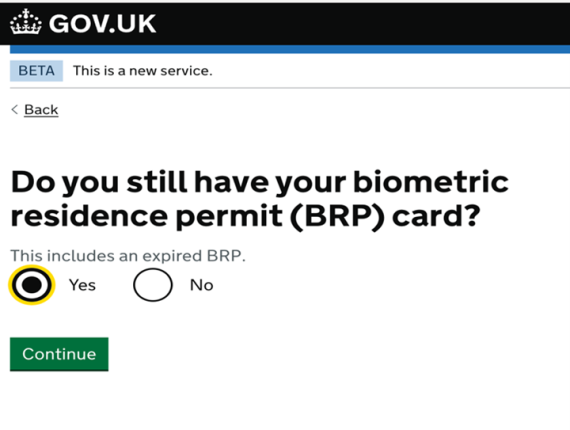
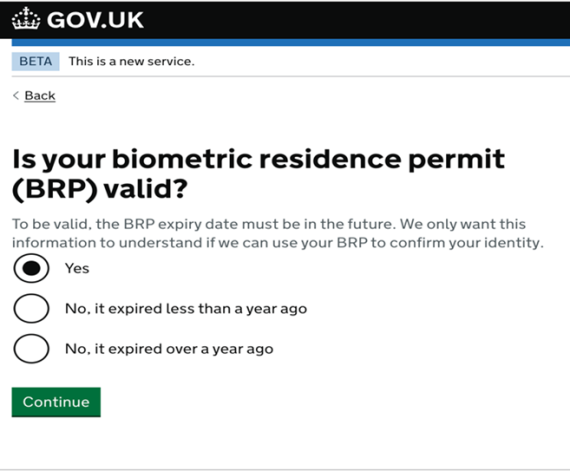
Answer ‘Yes’ to both questions to proceed to the next stage. (If you still have your BRP card and if it is still valid)

We proceed to the next stage by selecting “Me” when asked who you are creating an account for. (If you are filling the application for someone else ‘child, baby etc’ please tick the “Someone else” option and give relationship information in the next step)

In this section we enter the applicants first and last names and move on to the next stage. (If you have two names, you must enter both names with a space between them).

Once we have added our nationality information, we will continue with our application.
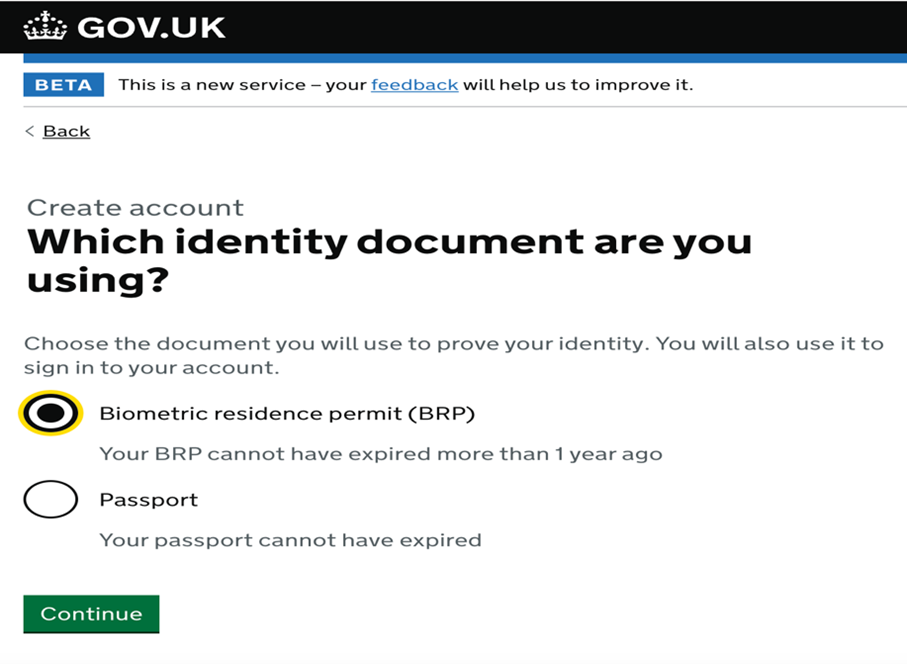
You can choose one of the above options for your authentication. We recommend that you select BRP as identity mapping will take place at a later stage. Moreover, after selecting the BRP, you will be able to proceed to the next stage.


At this stage we will enter your date of birth and the details of the email address you will use to log into your UKVI account. We recommend that you ensure that your email is an active and consistent email address.

If you want to enter the phone number as a UK number; You can write your phone number without adding the area code (+44) which means you can write in the form of 07xxx and go to the next step. However, if you are adding a non-UK number; You must add the area code at the start of your number.

If you do not want anyone else to access the account, you can continue by saying “No”.

You can proceed to the next stage by checking the information you have entered. At this stage you will need to log into the account you have created and verify your identity.

At this stage, select the ID you used to create the account and proceed to the next stage.
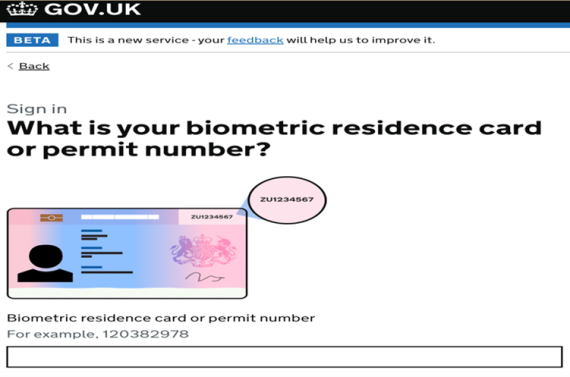
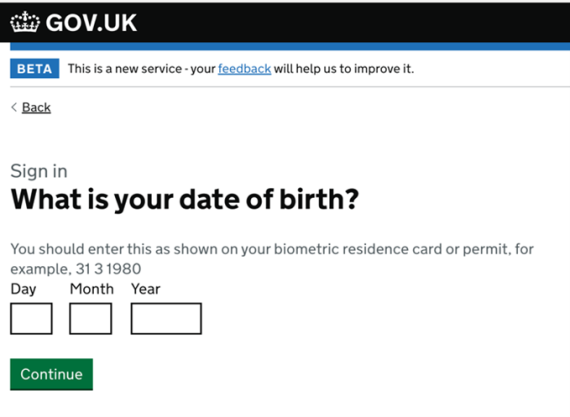
Enter the number on the top left of your BRP card and go to the next step and enter your date of birth again.

For the verification code, go to the next step by clicking on one of the options with the e-mail address or telephone number.

Proceed to the next stage by clicking on Start Application to apply for “Standalone Account Registration” for Authentication.

At the top of the page, click ‘Confirm Your Identity’ to proceed to the next stage.
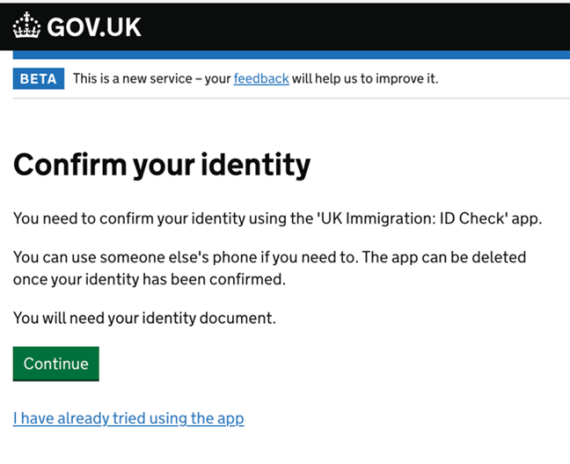
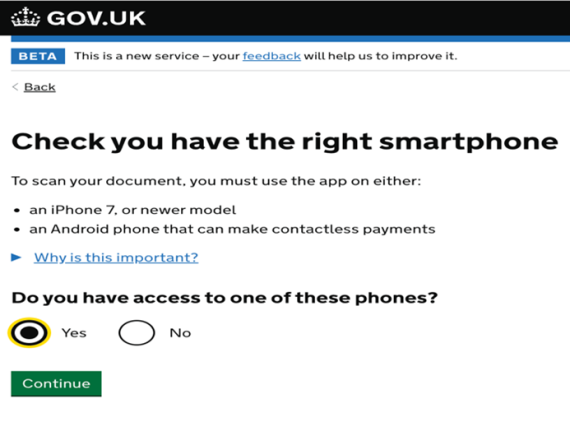
To verify at this stage, your phone must have a smartphone function. If you are using an Apple device, your phone must be iPhone 7 or higher.

In this section you will need to download the above application to your phone. The application can be found in the AppStore and GooglePlay.
After downloading the application, your BRP information, face verification process and photo verification process will be completed. You can complete the verification process by following the steps in the application. Once the verification process is complete, you will need to login again using the link below.

After clicking on the link, we will click on the ‘Login’ option as we have already created an account. After verifying your email address or phone number, you will see the following page.

If you have successfully completed the authentication process, the first stage will appear as “Completed”. We will then proceed to the second stage and select the ‘Submit’ option to create the security questions in this section and complete our application. (We recommend that you write down your security questions so that you do not forget them. If there is a problem with your account in the future, you will be able to access your account using your security questions).

Once you have submitted your application, the following email will be sent to the email address you used in your application.
Some time after you receive the above email, you will receive another email confirming that your E-Visa account has been approved.

At this stage, you can check your immigration status by clicking on the link in the confirmation email. This link is below and you may receive the following warning when you click on the link as you are still in the application process. We expect this issue to be resolved in the next few periods.

Stay tuned for further updates.
- Published in UK Immigration